
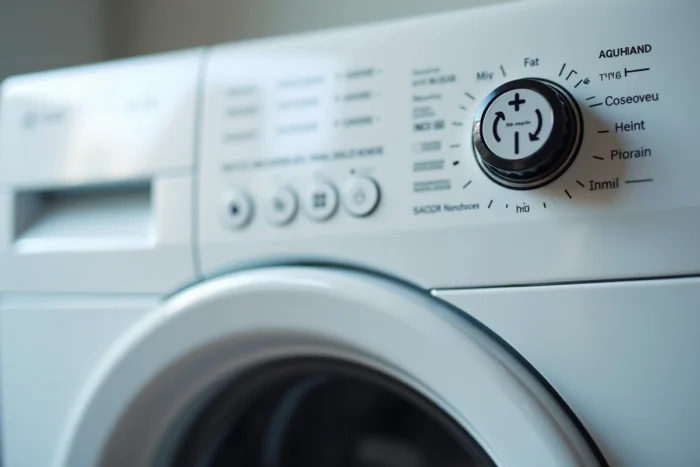
On Valberg washing machines, the spin icon appears as a spiral (or a stylized snail) enclosed in a circle. This symbol, shared with other entry-level manufacturers distributed in large retail stores, triggers an independent spin cycle or identifies the spin phase within a complete program. Its correct interpretation is crucial for both the lifespan of textiles and the overall energy consumption of the laundry appliance.
Valberg Spin Speed: What the Icon Doesn’t Specify
The spiral symbol indicates the function, not the speed. On most Valberg models (particularly the WF range), the spin speed is set separately via the rotary selector or function buttons, independently of the icon displayed on the control panel.
We often observe confusion: the user starts the program indicated by the spiral, thinking they will achieve the maximum spin of the machine. In reality, the spin speed depends on the selected program and the manual setting, not just the icon alone. A cotton cycle generally allows for the highest speed, while a delicate or synthetic program automatically limits the speed.
To properly identify the spin symbol on a Valberg machine and understand its concrete implications, two pieces of information must be cross-referenced: the icon (which confirms that a spin will take place) and the speed setting displayed on the screen or selector.
The Valberg manual also mentions a crossed-out spiral icon. The crossed-out spiral indicates total elimination of the spin, useful for wool or certain delicate textiles. Do not confuse it with the crossed-out drum icon, which prohibits machine washing according to the NF EN ISO 3758 standard.
Spin and Energy Consumption: The Link Not Explained in Valberg Manuals
Increasing the spin speed reduces the residual moisture of the laundry coming out of the drum. This technical point has a direct consequence on the overall energy bill of the household, and it goes far beyond the simple reading of an icon.
A faster spin significantly reduces the drying time in the dryer, which remains the most energy-consuming appliance in the laundry area. The spin cycle itself consumes much less than electric drying. Energy efficiency experts consider this lever one of the most concrete ways to lower consumption without changing appliances.
For Valberg users who dry in a machine, we recommend consistently selecting the maximum spin speed allowed by the program, unless there are textile contraindications. The savings are measured over time: fewer minutes in the dryer per cycle, multiplied by several hundred cycles per year.
When to Reduce the Spin Anyway
Some textiles cannot withstand a high spin. Wool felts under mechanical action, and delicate fibers deform. Before forcing the speed, check the garment label.
- Wool and cashmere: minimal or no spin (crossed-out spiral recommended)
- Silk and fine viscose: low speed, generally limited automatically by the delicate program
- Thick cotton, sheets, towels: maximum speed without risk, and this is precisely where the energy savings in drying are most pronounced
- Common synthetics (polyester, polyamide): intermediate speed, sufficient to limit residual moisture
Valberg Icons and NF EN ISO 3758 Standard: Two Distinct Systems
The icons on the Valberg control panel (spiral, drum, snowflake, etc.) are manufacturer symbols. They designate the machine’s programs. These icons do not correspond to standardized textile care symbols (NF EN ISO 3758 standard), even if some look visually similar.
The drum depicted on a garment label indicates the washing conditions allowed by the textile manufacturer. The drum on the Valberg control panel designates the cotton program or the main program. Confusion between the two systems leads to frequent programming errors.
How to Effectively Cross-reference the Two Systems
The reliable method is to first read the textile label (standardized symbols), then select the compatible Valberg program.
- Textile label: drum with number (max temperature allowed), line under the drum (moderate program), double line (very delicate program)
- Valberg control panel: cotton, synthetic, delicate, or wool icon, each associated with a default spin speed
- Final adjustment: manually adjust the spin speed if the default program does not match the fragility of the textile

Valberg Spin and Mold Prevention in the Drum
A point rarely addressed in Valberg user guides concerns the link between spinning and drum hygiene. Insufficiently spun laundry left in the drum promotes the development of mold and unpleasant odors, especially in poorly ventilated areas.
The spin cycle alone (triggered via the spiral icon) is also useful after an extra rinse or when a program has been interrupted. On Valberg models equipped with a delayed start, programming a final spin just before returning home prevents leaving damp laundry stagnant for several hours.
We also recommend leaving the door ajar after each cycle, including after a spin alone. This simple habit limits residual condensation in the door seal, an area prone to mold on all front-loading washing machines.
The spiral icon on a Valberg summarizes a mechanical function, but its thoughtful use touches on textile preservation, energy management, and appliance hygiene. Cross-referencing the control panel reading with that of the textile labels and adjusting the speed on a case-by-case basis remains the most reliable practice to get the most out of each cycle.