
To say “I’m hungry” several times a day eventually resembles a mechanical reflex. However, the French vocabulary surrounding appetite and satiety is rich, vivid, and sometimes funny. Varying your expressions allows for a better description of what the body feels, from the slight emptiness of mid-morning to the craving that prevents concentration.
Familiar expressions of hunger: what the register really changes
Choosing one expression over another does not only change the tone. The register indicates the intensity of the sensation and the social context in which one finds oneself. Saying “I could eat a bite” at the table with friends does not have the same effect as throwing out “I’m starving” after a workout.
Have you ever noticed that certain phrases trigger an immediate smile? This is because they carry a strong mental image. “I have my stomach in my heels” forces the listener to visualize the scene, making the phrase memorable. Purely descriptive formulations (“I’m hungry,” “I would like to eat”) remain neutral, almost administrative.
There are indeed various ways to say I’m hungry listed according to their register, from everyday language to recent slang. This diversity reflects the central place of meals and food in Francophone culture.
Vivid expressions for saying you’re hungry: the animal kingdom and the body
The French language loves to compare appetite to that of animals. Two expressions have dominated this register for decades, and they remain very much alive in daily use.
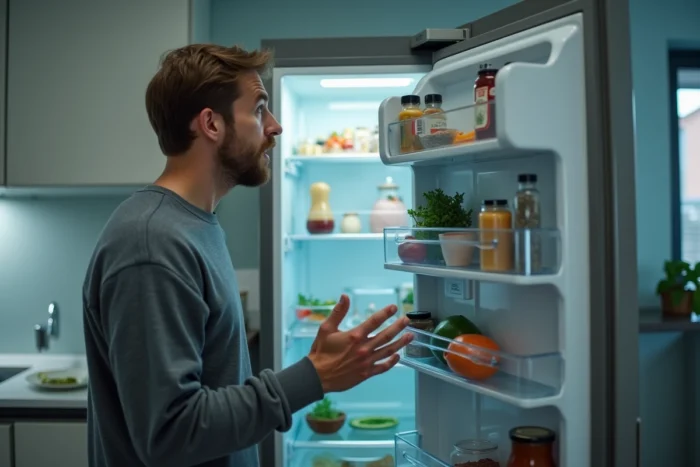
To have a wolf’s hunger
This is the most well-known. It works well in writing and speaking, in family or at the office. It signals an intense appetite without sounding vulgar. It can be used in front of any listener without risking a misunderstanding of register.
To have one’s stomach in one’s heels
The image is absurd, thus effective. This expression belongs to the everyday register and is suitable for all situations. It adds a touch of physical humor that “I’m very hungry” does not produce.
To eat like four
This one describes less the sensation of hunger than the anticipated quantity. It is often used as a cheerful warning before a meal: “Make plenty, I could eat like four.” It functions as a promise of appetite rather than a complaint.
Indirect expressions to express hunger without naming it
Teaching resources for French as a foreign language increasingly emphasize a point that native speakers apply without thinking: expressing the need through an action rather than a state. Instead of declaring “I’m hungry,” one formulates a request or a suggestion.
- “Do you have something to nibble on?” – hunger is implicit, the tone remains relaxed and imposes nothing on the listener.
- “I could eat a bite” – the conditional softens the request and leaves the door open for refusal.
- “Shall we sit down to eat?” – the collective formulation transforms a personal need into a group proposal, making it smoother in a social context.
These indirect expressions are perceived as more natural in everyday conversation. They avoid the declarative aspect of “I’m hungry” in its raw form, which can sound like a demand when the context does not lend itself to that.
Recent slang and youth language around appetite
Vocabulary evolves quickly under the influence of social media. Some recent formulations deserve to be known, if only to understand one’s children or younger colleagues.

“I’m starving” remains the most widespread familiar expression. It crosses generations and appears in regularly updated slang lists. Its intensity lies between “I’m hungry” and “I’m dying of hunger,” with a direct and unfiltered tone.
“I’m crazy hungry” uses the intensifier “crazy” popularized among young Francophones. This construction applies to many adjectives and sensations (“it’s beautifully crazy,” “I’m hot crazy”). Applied to hunger, it signals an extraordinary appetite with an expressive energy that standard register does not allow.
“I have a little emptiness” sits at the opposite end of the spectrum. The expression is gentle, almost shy. It describes a slight hunger, often between two meals, and is perfectly suited for a professional context or polite conversation. It is frequently associated with mid-afternoon snacking.
Choosing the right expression according to the meal time
Not all these formulations are interchangeable. The time of day and the proximity of the meal influence the choice.
- Before breakfast or after a short night’s sleep: “I have my stomach in my heels” or “I’m starving” convey the morning urgency well.
- In mid-morning or mid-afternoon, between meals: “I have a little emptiness” or “Do you have something to nibble on?” are more appropriate, as the hunger is moderate.
- Before a hearty anticipated meal (celebration dinner, restaurant): “I have a wolf’s hunger” or “I could eat like four” set the mood and announce an appetite worthy of the occasion.
- In a professional or formal context: “I could eat a bite” or “Shall we sit down to eat?” maintain decorum while clearly expressing the need.
Adapting one’s vocabulary to the situation is not superficial. The right word makes communication more precise and more pleasant for everyone around the table.
The next time the sensation of hunger manifests, trying a different formulation may be enough to change the energy of a conversation. An “I have a little emptiness, shall we nibble?” does not provoke the same reaction as “I’m starving.” Each expression carries its own level of appetite, context, and humor, and that is precisely what makes French so enjoyable to use in daily life.