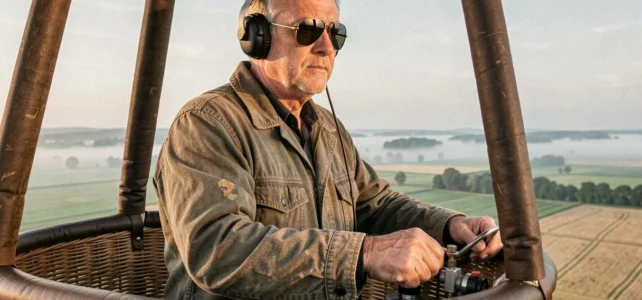
The hot air balloon pilot has a specific name in French aeronautical vocabulary: they are called aéronaute. This term, inherited from the first balloon flights of the 18th century, refers to anyone who pilots an aerostat, that is, a device that is lighter than air. Behind this uncommon word lies a technical profession, framed by strict regulations and skills that the general public knows little about.
Ballooning remains a niche universe in France. Few active pilots, strong weather constraints, a changing regulatory framework: the profession of aéronaute deserves to go beyond the clichés of contemplative flight to examine what is really happening in the basket.
Aéronaute, aérostier, pilot: the terms of ballooning and their differences
Confusion between the terms is common. The aéronaute pilots a free balloon, such as a hot air balloon or a gas balloon. The aérostier, historically, referred to the military assigned to captive balloons, particularly during the wars of the 19th century. The two words coexist, but in the civil and sporting context, it is indeed “aéronaute” that prevails.
If you are wondering what the hot air balloon pilot is called, the official answer is therefore aéronaute, a term that the French Federation of Ballooning uses in its texts and licenses.
The word “pilot” remains correct in everyday language, but it lacks precision. A pilot can fly a plane, a helicopter, or an ultralight. The aéronaute, on the other hand, has no horizontal propulsion engine: they work exclusively with the vertical, manipulating the heat of the air inside the balloon’s envelope.
Training and hot air balloon pilot license in France
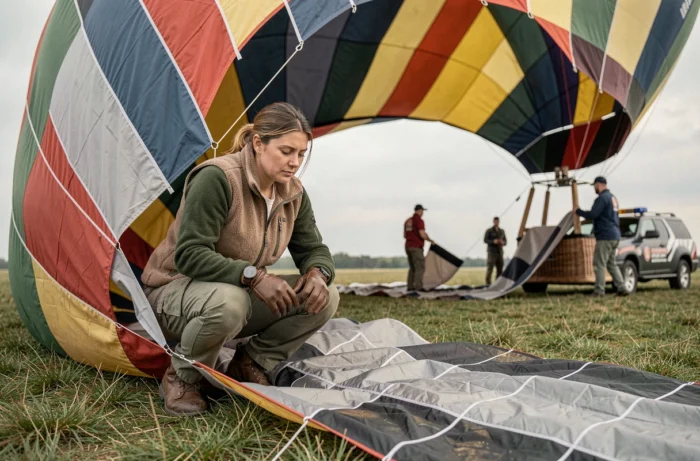
To become an aéronaute, one must obtain a specific license issued by the General Directorate of Civil Aviation (DGAC). The training includes a theoretical part (meteorology, aviation regulations, navigation, aerology) and a practical part with a minimum number of flight hours supervised by a qualified instructor.
The regulatory framework is evolving. An order dated July 22, 2026, published in the Official Journal, modifies the conditions for the approval of training organizations for aircraft pilot instructors. This text now requires the formal designation of a responsible manager and an educational manager within each organization, with enhanced organizational and educational requirements.
The 2017 order that governed the training of ultralight instructors has been repealed, reflecting a general increase in requirements. Consequently, pilots trained under this new framework should benefit from more structured teaching. This regulatory trend affects all of ballooning, not just ultralights.
What training does not always show
The license validates technical skills. However, it does not prepare one for the commercial management of a passenger flight activity, nor for the logistical constraints of the field: finding takeoff areas, negotiating with landowners, managing a ground recovery team. These aspects are learned on the job, often after several seasons.
Flight secrets: how the aéronaute controls a hot air balloon without a rudder
The hot air balloon has no steering wheel, no rudder, and no horizontal engine. The only control the pilot has is over the vertical axis. By activating the propane gas burner, the aéronaute heats the air contained in the balloon’s envelope, causing the basket to rise. By opening the valve located at the top of the envelope (called a parachute), they release hot air and initiate the descent.
Horizontal movement depends entirely on air currents. At different altitudes, winds blow in varying directions and speeds. The main “secret” of the aéronaute is to exploit these successive layers of air:
- Before the flight, the pilot studies weather forecasts and atmospheric surveys to identify exploitable wind layers at different altitudes
- In flight, they finely adjust the altitude through short heating bursts or purges of the envelope to catch a favorable current
- Landing is sometimes prepared several kilometers in advance, as the balloon cannot “brake” or change trajectory abruptly
This navigation through air layers has a name in jargon: selective altitude piloting. Hot air balloon competitions, such as the French championships, are precisely based on this ability to reach ground targets by only manipulating the vertical.
Weather as an absolute constraint
An experienced aéronaute cancels more flights than they actually conduct. Usable slots are generally limited to the early hours after sunrise and late afternoon, when thermals (upward warm air currents) are weak. Ground winds exceeding a certain speed make inflating the envelope dangerous, and gusts at altitude can compromise trajectory control.
The decision to fly or not remains the sole responsibility of the pilot. No commercial pressure should take precedence over this assessment. Documented accidents in ballooning often involve degraded weather conditions or an underestimation of the wind.

Safety in hot air ballooning: recent incidents and pilot vigilance
Ballooning has an overall favorable safety record compared to other aerial activities. Serious incidents remain rare in France, but they do exist. During a hot air balloon show in Marmande, a pilot was burned during a demonstration. The organizers specified that the injuries were not major, but the event serves as a reminder that handling the burner and being close to the envelope involves real risks.
The BEA (Bureau of Investigations and Analyses) tracks reported events involving balloons. This data helps identify recurring patterns: contact with power lines, forced landings due to sudden wind changes, burns during inflation.
For passengers, the vigilance of the aéronaute translates into simple but non-negotiable instructions:
- Landing position (back bent, hands gripping the basket handles) repeated before each flight
- Systematic checking of the envelope, cables, burner, and propane gas reserve before inflation
- Updated weather briefing within the hour preceding takeoff
The aéronaute flying with passengers engages their license and civil liability with each flight. This legal dimension, rarely mentioned in flight accounts, weighs heavily in the pilot’s daily decisions. A flight canceled out of caution is a successful flight from the perspective of aviation safety, even if passengers leave disappointed.