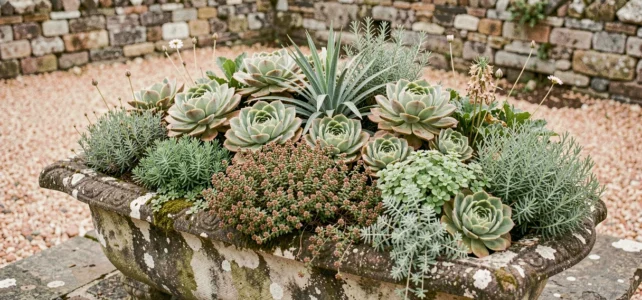
A stone trough imposes its own cultivation rules. Limited substrate volume, rapid drainage, warming of the walls in summer, localized frost in winter: the choice of plants and maintenance methods directly stem from these physical constraints. Here, we detail the technical points that make the difference between a successful trough and a container where everything declines within two seasons.
Substrate and drainage in troughs: the often overlooked technical foundation
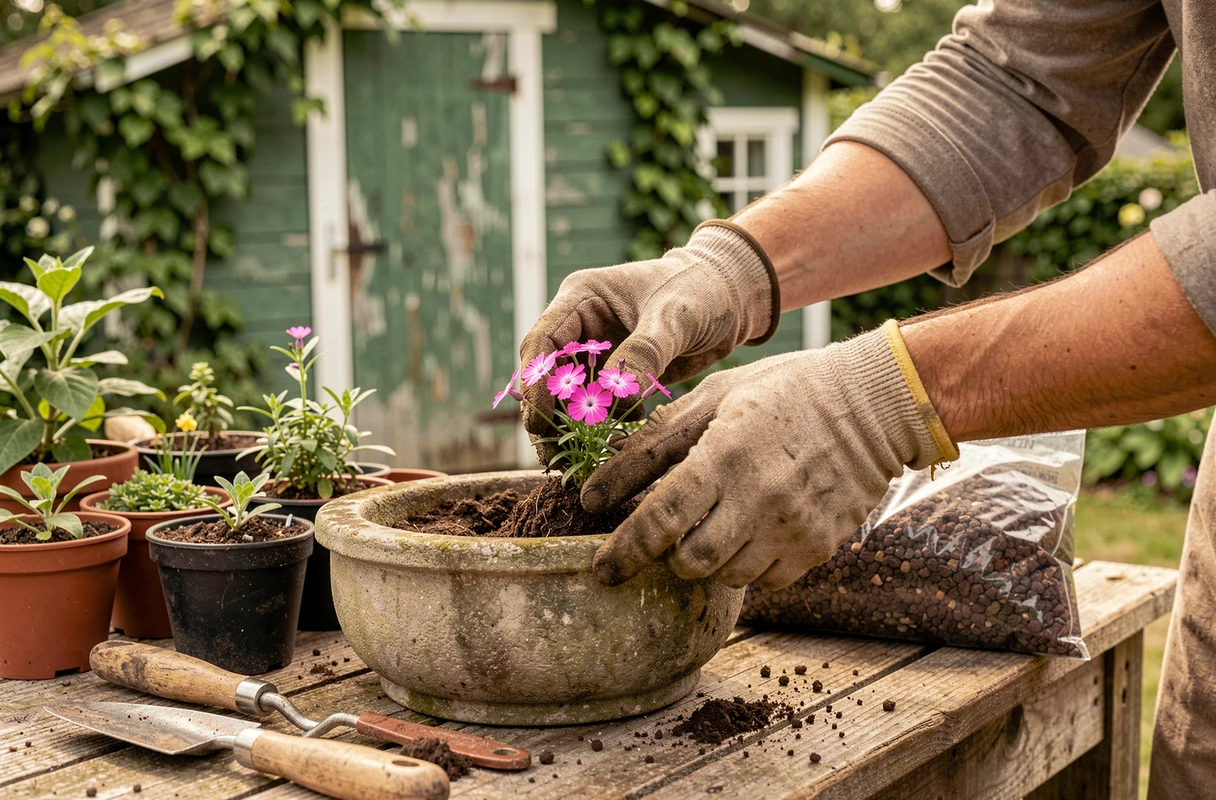
The first reflex is to drill the bottom of the trough if it hasn’t been done already. Without a drainage hole, stagnant water suffocates the roots within a few weeks, even on plants known for their robustness. We recommend a concrete drill bit of sufficient diameter to create at least two openings in a standard-sized trough.
The drainage layer occupies the first third of the volume: pottery shards, coarse gravel, or pumice. Above this, a substrate composed of one-third topsoil, one-third coarse sand, and one-third fine gravel replicates the conditions of a rocky soil. An overly rich substrate encourages the etiolation of alpine plants, which lose their compact growth habit and cold resistance.
To explore suitable plant associations for this type of container, you can discover Les Hommes Et Les Abeilles on the subject.
Mineral mulching (gravel, crushed slate) is preferable to organic mulching: it limits residual moisture at the collar, reduces the proliferation of unwanted mosses, and maintains aesthetic coherence with the stone.
Perennial rock garden plants suitable for a stone trough
Stonecrops, houseleeks, and saxifrages form the basic trio for any trough planting. Their shallow root system adapts well to a thin substrate, and their CAM or semi-succulent metabolism allows them to endure prolonged dry periods without supplemental watering.
Evergreen perennials for year-round interest
Sempervivum offers a palette of colors (green, purple, silver) that evolves with the seasons. Their rosette remains decorative even in mid-winter. Euphorbia myrsinites, with its trailing stems and blue-gray foliage, adds volume without overwhelming the container.
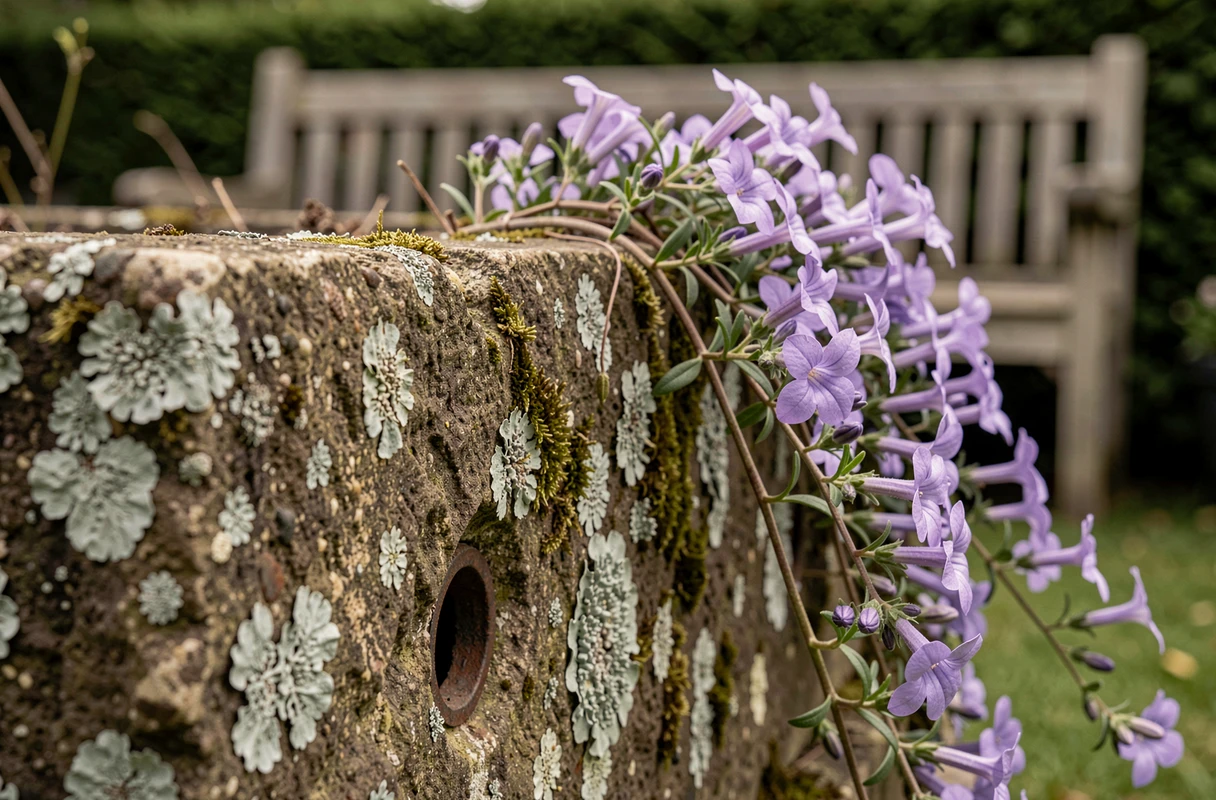
Creeping thyme (Thymus serpyllum) and certain wall bellflowers complete the composition by covering the surface of the substrate. Their rooting stabilizes the soil mix and limits erosion during heavy rains.
Flowering spread over several seasons
The challenge is not to concentrate all the flowering in a single month. We generally combine:
- Aubrietas and Arabis for spring, with carpets of flowers spilling over the edges of the trough
- Dwarf perennial geraniums and bellflowers for summer, which take over without requiring deep substrate
- Late-flowering sedums (Sedum cauticola, Sedum sieboldii) to extend interest into autumn
Dwarf lavenders are suitable in full south exposure, provided they are pruned after flowering to prevent the base from becoming bare. In a trough exposed to partial shade, it is better to favor cushion saxifrages and small wall ferns.
Maintenance of a stone trough: technical gestures and common mistakes
The maintenance of a planted trough is divided into two distinct aspects: care for the plants and preservation of the stone itself.
Watering and fertilization in a restricted volume
Excessive watering remains the primary cause of mortality in troughs. With the substrate volume being low, just a few heavy waterings spaced too closely can saturate the mix. In summer, moderate watering every four to five days is suitable for most rock garden plants. In winter, watering is unnecessary except in cases of prolonged dryness under cover.
Fertilization is almost superfluous. A very light application of low-nitrogen fertilizer, once a year at the beginning of spring, is sufficient. Excess nitrogen causes soft growth, which is susceptible to diseases and frost.
Cleaning the stone without damaging it
Natural stone reacts poorly to acidic products, bleach, and high-pressure cleaners used too closely. A warm water cleaning with a neutral pH product preserves the patina without altering the surface. A soft brush removes green deposits; the result is better than an aggressive chemical treatment.
The lichens and mosses that colonize the exterior stone are part of the natural patina. Systematically removing them exposes the stone to UV rays and accelerates its aging. We generally leave the lichens in place and only intervene on the mosses that invade the growing substrate.
Exposure and placement: adapting the trough to the garden’s microclimate
A stone trough in full south exposure accumulates heat in its walls and releases it at night. This microclimate favors Mediterranean plants and succulents but scorches understory species. Conversely, a trough placed to the north or under a deciduous tree is suitable for saxifrages, small ferns, and liverworts.
The weight of an old massive stone trough prohibits frequent movement. The choice of location is made before planting, taking into account seasonal sunlight and the proximity of a water source for summer watering. Elevating the trough on stone or brick wedges improves drainage and protects the bottom from frost by contact with moist soil.
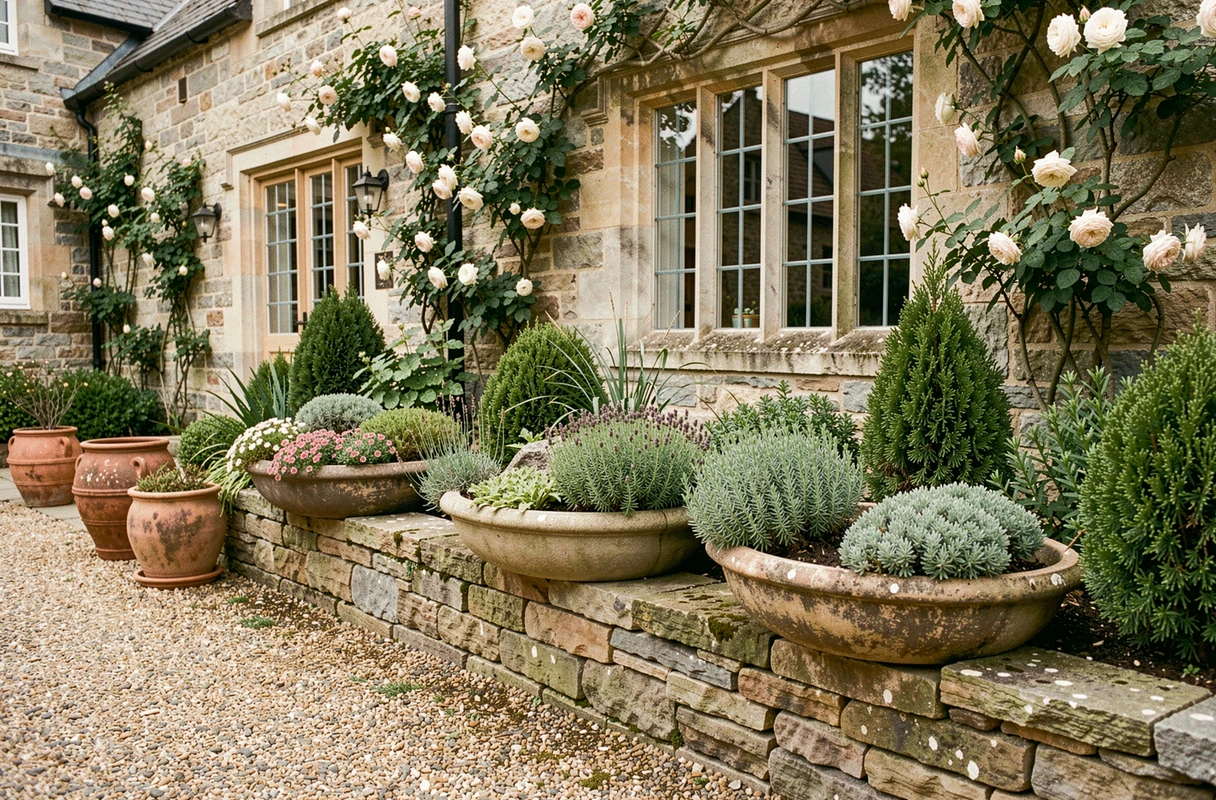
The success of a stone trough relies on three concrete decisions: a draining and lean substrate, rock garden perennials suited to the available volume, and maintenance reduced to the strict minimum. The most common pitfall remains excessive care, whether it be watering, fertilization, or cleaning the stone. A well-prepared trough from the start requires very few interventions afterward.