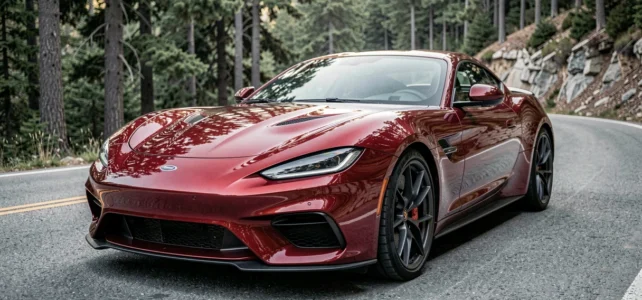
Buying a car, choosing from dozens of brands, understanding the new traffic rules: the automotive topic affects the daily lives of millions of drivers. With the rise of electrified powertrains, the maintenance of low-emission zones, and the rapid evolution of ranges at Peugeot, Renault, or BMW, navigating this landscape requires a minimum of solid reference points.
Electric and hybrid powertrains: what European figures reveal
Have you noticed that car advertisements are mentioning diesel less and less? It’s no coincidence. Data from the first half of 2026 shows that nearly seven out of ten new cars sold in Europe are electrified.
Conventional hybrids (HEV) account for about 37% market share. Plug-in hybrids are around 10%. 100% electric cars exceed 20%. Pure combustion vehicles are declining quarter after quarter.
This shift has concrete consequences for choosing a new vehicle. A buyer who is torn between a Peugeot e-308 and a Renault Mégane E-Tech is asking different questions than five years ago: real range, charging time, cost per kilometer rather than consumption per 100 km.
For enthusiasts who follow model news and want to discover cars on Scoot Auto, this electric shift is also reshaping the used car market, where recent combustion vehicles maintain a high value as long as demand remains strong.

Low-emission zones and Crit’Air sticker in 2026: regulations still in effect
Many drivers thought low-emission zones (LEZ) were buried. The Parliament had voted for their removal in April 2026 in the economic life simplification law.
The Constitutional Council decided otherwise. Its decision of May 21, 2026 (n° 2026-903 DC) censored this provision for procedural reasons. LEZ and the Crit’Air sticker remain fully applicable.
Why is this a topic for buying a car? Because restriction calendars continue to tighten progressively for the most polluting vehicles. A used car buyer must check the Crit’Air classification of the vehicle before signing, or risk being banned from driving in major French urban areas.
Check a used vehicle’s compatibility with LEZ
The reflex to adopt is simple. Before any transaction, consult the Crit’Air sticker corresponding to the date of first registration and the powertrain of the vehicle. Restrictions vary from one metropolitan area to another, complicating matters for a vehicle purchased in one city and used in another.
- Identify the Crit’Air class of the targeted vehicle (accessible via the license plate number on the official site)
- Consult the restriction calendar of your urban area, as each metropolis progresses at its own pace
- Anticipate the next steps: a Crit’Air 3 vehicle allowed in 2026 may be excluded as early as 2027 in certain zones
Choosing between mainstream and premium brands: beyond the badge
Peugeot, Renault, Citroën on one side. BMW, Audi, Mercedes on the other. The common reflex is to classify brands into two rigid categories. The reality is more nuanced.
Mainstream brands have significantly upgraded their offerings in recent years. A Peugeot 408 or a Renault Austral offers finishes, driving aids, and materials that rival the entry-level premium of ten years ago. The perceived quality gap between mainstream and premium is narrowing model by model.

What still justifies the price gap
On a premium vehicle, three factors make a daily difference:
- Soundproofing and suspension comfort, noticeable from the first kilometers on the highway
- Residual value at resale, often more favorable for a BMW 3 Series or an Audi A4 than for an equivalent mainstream model
- The after-sales network and included maintenance programs, which simplify ownership over several years
For a primarily urban purchase with short trips, a well-equipped mainstream model largely meets the needs without the extra cost of a premium badge.
Car buying guide: criteria that enthusiasts overlook
Comparisons focus on power, consumption, and list price. Three less visible criteria deserve equal attention.
Insurance costs can vary widely depending on the model, the driver’s age, and the geographical area. A compact SUV can be significantly cheaper to insure than a sports sedan of equivalent power. Comparing quotes before choosing a model avoids unpleasant surprises.
The availability of spare parts becomes a real issue for brands that have recently entered the European market. Some Chinese manufacturers offer attractive prices, but delivery times for parts can reach several weeks in case of repairs.
The last often overlooked criterion: technological compatibility. A vehicle whose multimedia system no longer receives software updates after three years becomes frustrating to use, especially for connected models that rely on manufacturer applications.
Whether you are looking for your first vehicle or closely following automotive news, these practical criteria weigh as much on long-term satisfaction as the technical specifications. The automotive market is evolving rapidly, and yesterday’s reference points (economic diesel, premium synonymous with reliability) no longer automatically apply. Staying informed, cross-referencing sources, and checking local regulatory constraints remains the best buying guide there is.