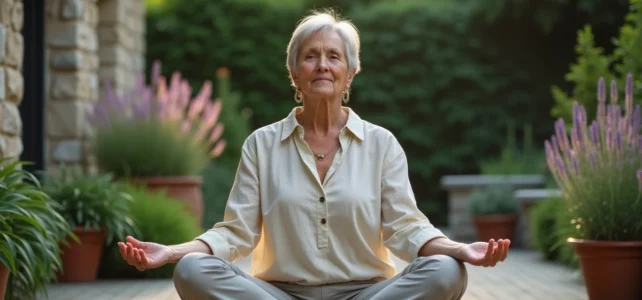
After 60, daily life changes pace. Workdays give way to more leisure time, but this time does not fill itself satisfactorily. The well-being of seniors relies on concrete choices, repeated day after day, that affect both the body and the mind.
Schedule and Regularity of Physical Activity: The Detail That Changes Everything
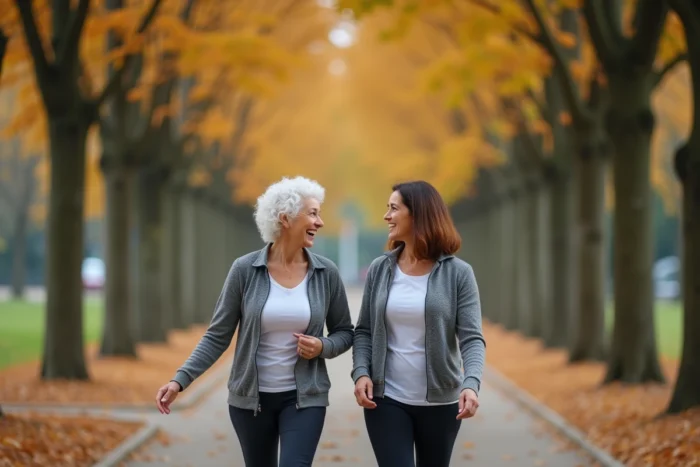
Have you noticed that a walk taken at the same time every morning seems easier than an improvised effort at the end of the day? This feeling has an explanation. A study from the University of Florida published in 2024, shared by Top Santé, shows that engaging in moderate activity in the morning, at a fixed time, yields better results for those over 60 than training at variable times.
The human body operates in cycles. Establishing a morning exercise routine allows the cardiovascular system to adapt gradually. There’s no need for an ambitious sports program: a brisk walk, some balance exercises, or a gentle gym session are sufficient.
What matters is repetition. A senior who walks for thirty minutes every morning at the same time gains more benefits than another who takes a long hike on Sunday and remains sedentary all week. To delve deeper into this type of approach, the wellness tips on Tendance Équilibre address the issue of physical activity adapted for seniors from several practical angles.

Cognitive Stimulation Associated with Movement: An Underestimated Duo
Physical activity protects the body. Intellectual stimulation protects the mind. Combining the two in the same session amplifies the effects of each.
This approach is gaining ground in sports-health programs aimed at those over 65. The idea is simple: during a balance exercise, a mental task is added. Counting backward while walking on a line. Naming colors while performing arm movements. The brain engaged during physical effort creates new connections more effectively than at rest.
Here are some examples of accessible combinations:
- Outdoor walking with active observation (counting the birds seen, memorizing street names taken)
- Standing balance exercises while reciting a shopping list or solving a mental calculation
- Soft ball games in a group with changing verbal instructions (throwing to the right when hearing a first name, to the left for a city name)
These activities require no equipment or professional supervision. They transform a mundane gym session into a complete workout for the body and mind.
Adapting Your Home After 60: Beyond Grab Bars
Most articles on senior well-being mention home adaptation in passing. Installing a grab bar in the shower, adding lighting in the hallway. These tips are useful, but they only scratch the surface of the problem.
The ergonomics of furniture determines daily autonomy much more than occasional adjustments. The height of a seat determines whether a person can get up alone. The depth of an armchair influences posture and thus back pain. The width of passages between furniture allows or prevents movement with a walker.
Rethinking Circulation in Each Room
Recent content on furniture in care facilities shows that analyzing actual usage now precedes the choice of equipment. This principle also applies at home. Before buying new furniture, one should observe how they actually move in the room.
Ask yourself: what routes do you most often take between the bed, the bathroom, and the kitchen? A poorly placed piece of furniture on this route creates a daily risk of falling. Moving a dresser by fifty centimeters can eliminate a danger that no grab bar could compensate for.
Seating: A Technical Choice, Not Decorative
A sofa that is too low forces one to strain their knees to get up. An armchair that is too deep prevents the feet from resting flat on the ground. These details may seem trivial at 40, but they determine autonomy at 70.
Criteria to check before purchasing seating:
- Seat height from the floor to the edge of the seat: knees should form an angle close to 90 degrees, feet flat
- Armrests sturdy enough to serve as support for getting up, and at the right height to avoid straining the shoulders
- Seat depth suitable for thigh length, so that the back touches the backrest without sliding forward
Health Insurance After Retirement: A Decision Often Postponed
Retirement changes social coverage. Employer-sponsored health insurance disappears or becomes more expensive. Many seniors keep their old contract out of habit, without checking if it still meets their actual needs.
Annual cancellation, possible after one year of commitment, allows changing insurance at any time. This regulatory change opens the possibility to compare offers without waiting for the contract anniversary date. Expense items evolve with age: dental care, optics, and audiology take up an increasing share of the health budget.
Checking each year the adequacy between subscribed guarantees and actual care consumed avoids paying for coverage that has become unnecessary or discovering a high out-of-pocket expense for a now-priority item.
Social Connection After 60: Quality Over Quantity
Social isolation is as well-documented a factor of decline as sedentary behavior. Maintaining regular contacts protects mental and cognitive health. However, multiplying outings without real exchange does not produce the same effect as an in-depth conversation with a close person.
A sincere exchange of twenty minutes a day protects better than a passive group activity. Participating in a workshop where one truly interacts (collective cooking, board games, choir) engages the brain and emotions more than attending a lecture in silence.
Senior animation programs offered by some municipalities now incorporate this relational dimension. They prioritize small groups, collaborative activities, and formats that encourage everyone to speak.
Well-being after 60 is not just a list of good habits. It relies on precise adjustments, tailored to one’s own physical, social, and financial situation. A rethought home, regular morning physical activity, an annually verified insurance contract, and a few authentic exchanges each week form a solid foundation on which to build a satisfying daily life.