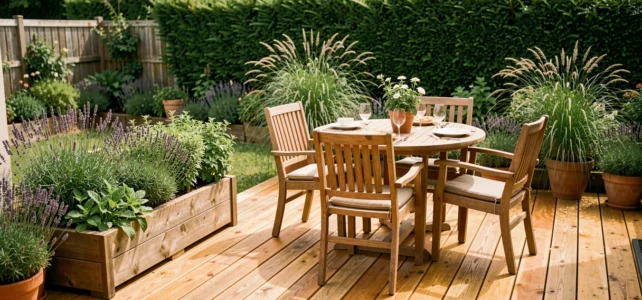
A garden where wood predominates creates an atmosphere that neither concrete nor metal can replicate. Visible grain, color that changes with the seasons, warm contact under bare feet: outdoor woodwork transforms a simple plot into a livable extension of the home. However, it is essential to choose the right species, anticipate aging, and install the elements correctly to avoid having to redo everything three years later.
Wood classification for outdoor use: a technical criterion to check before purchase
The mention “class 3” or “class 4” on a decking board label corresponds to a normative classification (classes 1 to 5). It describes the level of moisture exposure that the wood can withstand without degrading. Class 3 wood is suitable for vertical elements exposed to rain (cladding, fencing).
Only class 4 wood withstands prolonged contact with the ground or stagnant water, making it suitable for terraces, buried borders, or pergola posts.
A common pitfall is using class 3 pine for decking because it is cheaper. The initial savings quickly disappear when the boards warp or blacken after a few winters. Douglas fir, larch, and chestnut naturally reach class 3, sometimes 4 depending on the heartwood. Autoclaved treated woods (pressure-injected Scots pine) also reach class 4, but the quality of the treatment varies by provider.
By searching for species suitable for each use, detailed sheets can be found on bois-et-jardin-42.fr, where references are categorized by purpose (decking, fencing, raised vegetable beds).
Natural wood, treated wood, or composite: what choice for your terrace
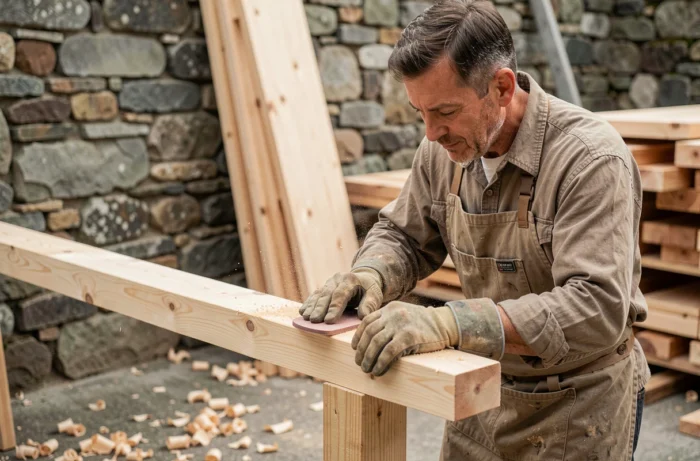
The choice of material determines the budget, maintenance, and lifespan of the terrace. Here are the three main categories with their specific characteristics.
- European natural wood (Douglas fir, larch, chestnut): moderate price, authentic appearance, natural graying within a few months if no saturator is applied. Requires a gray remover or saturator approximately every two years.
- Autoclaved treated wood (class 4 Scots pine): the cheapest at purchase, greenish hue when installed that fades. Its longevity directly depends on the depth of the treatment. Since 2024, wood protection products (biocides TP8) are subject to a specific professional certification (Certibiocide), which reserves the most effective complementary treatments for trained applicators.
- Wood-polymer composite: no sanding, no saturator, wide range of colors. However, it heats up more in the sun and its appearance remains uniform, lacking the living grain of solid wood.
A technical point often overlooked: installation on compacted earth without a supporting structure destroys even high-quality wood. Elevated joists on adjustable pads ensure ventilation under the boards and drain rainwater. Without this air gap, moisture stagnates and accelerates degradation.
Wooden fencing and privacy screens: combining intimacy and style in the garden
A wooden fence is not just about opaque panels screwed between two posts. The choice of fence type depends on what you are looking for: a clear separation, a visual filter, or a decorative element.
The “ganivelle,” for example, is a lattice of chestnut slats connected by wire. It defines a space without closing it off, allows wind to pass (which avoids the “sail” effect in storms), and ages without treatment thanks to the natural tannin in chestnut. It is particularly suitable for coastal gardens or sloped terrains.
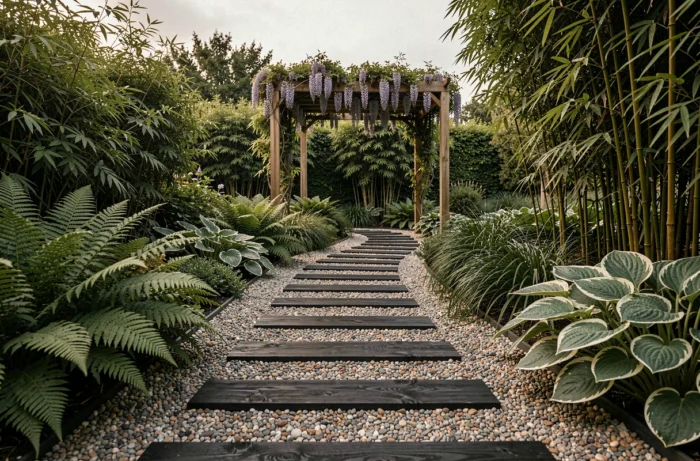
For a more opaque privacy screen, horizontally spaced slats create a shutter effect. The spacing between the slats regulates both privacy and air circulation, which also protects the plants located below.
For the posts, direct embedding in concrete remains reliable, but a metal support anchored in a concrete block allows for the replacement of a damaged post without tearing everything down. This installation detail simplifies long-term maintenance.
Maintenance of outdoor wood: actions that extend its lifespan
Wood grays. This is not a defect; it is a natural chemical reaction to UV radiation. Graying does not affect structural integrity. Some homeowners appreciate it, while others prefer to maintain the original color.
To keep the color, a saturator (non-film-forming finish) penetrates the wood without creating a surface film. Unlike varnish, it does not peel and can be reapplied easily after cleaning. Applying a saturator on dry wood, outside of freezing and heatwave periods, remains the basic rule for proper absorption.
High-pressure cleaning is tempting, but the power of the jet digs into the soft fibers and opens the door to water infiltration. A brush with a gray remover product is sufficient in most cases.
- Decking: clean with a gray remover once a year, saturator every two years.
- Fencing and cladding: a simple annual rinse with low-pressure water, saturator every three to four years depending on exposure.
- Garden furniture: light sanding with fine grain followed by oil suited to the species (teak oil for exotic woods, linseed oil for pine).
One last point to watch: metal fasteners. Stainless steel screws resist much better than galvanized screws in a humid environment. When screws rust, they cause black streaks on the wood and weaken the assembly. Replacing all the screws with stainless steel during a renovation costs little and significantly changes the longevity of the structure.
Wood in the garden ages well when installed methodically and maintained without excess. Choosing the right class of use from the start, ventilating horizontal structures, and protecting fasteners directly influence the durability of the structure over time.