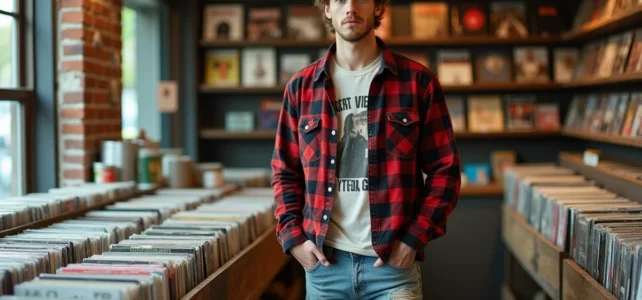
A ripped jean, an open flannel shirt over a faded t-shirt, worn Converse on the feet. In the early 90s, this outfit was not a calculated fashion choice. It was simply how Kurt Cobain, the lead singer of Nirvana, dressed every day. This sartorial nonchalance, however, reshaped the style codes for an entire decade.
The Marc Jacobs collection of 1992 and the shift to the runways
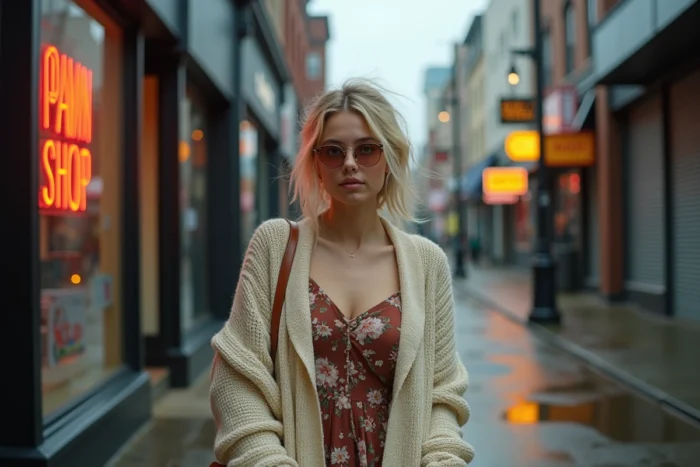
Have you ever noticed that a piece of clothing worn by a rock star often ends up in a shop window? With Kurt Cobain, the phenomenon took on a particular magnitude. In 1992, designer Marc Jacobs presented his collection for Perry Ellis, directly inspired by grunge aesthetics. Flannel shirts, beanies, floral prints on light dresses: Seattle’s anti-fashion wardrobe hits the New York runways.
This show caused a shock in the industry. Marc Jacobs actually lost his position at Perry Ellis shortly after. The luxury sector then considered that adopting a style born in thrift stores and concert basements was provocative. In hindsight, this collection has become a case study, the precise moment when Kurt Cobain’s style ceased to belong to the music scene and entered the history of fashion.
Flannel, cardigan, and Converse: grunge pieces beyond the cliché
Reducing grunge style to a plaid shirt would miss what made it recognizable. Cobain’s look relied less on specific pieces than on the way they were worn. Everything seemed too big, a bit worn, combined without apparent logic.
Kurt Cobain’s signature clothing
- The oversized cardigan, often in mohair or thick wool, worn as an extra layer rather than as a style accessory. The one he wore during Nirvana’s MTV Unplugged has become a collector’s item.
- The worn and torn jeans, not bought that way in stores, but genuinely damaged through use. The visible wear was part of the message.
- The Converse sneakers, worn dirty and faded. No limited edition or special collaboration: just ordinary, accessible shoes, deliberately neglected.
- Group or graphic t-shirts, often sourced from thrift stores, worn under an open flannel shirt.
What made the whole coherent was the casual layering and off-kilter proportions. A cardigan falling over a fitted t-shirt, loose jeans held up by nothing, layers that seemed not to have been chosen together. This approach to clothing invented a style register that fashion today calls relaxed layering.
Counter-model to the 80s: why grunge had such an impact on fashion
To understand the impact of Cobain’s style, one must remember what preceded it. The 80s were dominated by structured silhouettes, shoulder pads, shiny fabrics, and heavy makeup. Fashion displayed success, appearance, and overt excess.
Grunge took the exact opposite of this aesthetic. Wearing second-hand clothes, choosing comfort over elegance, rejecting any form of visible effort: it was a gesture of rupture. Cobain did not present himself as a model, and it was precisely this stance that appealed to a generation tired of the glamour of previous decades.
This rejection of appearance had a social dimension. Shopping at thrift stores was not a marketing choice, but a reflection of a lifestyle. The Seattle music scene, where grunge was born, brought together musicians who simply could not afford to dress otherwise. Cobain’s anti-fashion expressed a sincere rejection of ostentatious luxury.
MTV, magazines, and shopping malls: the massive spread of the Cobain look
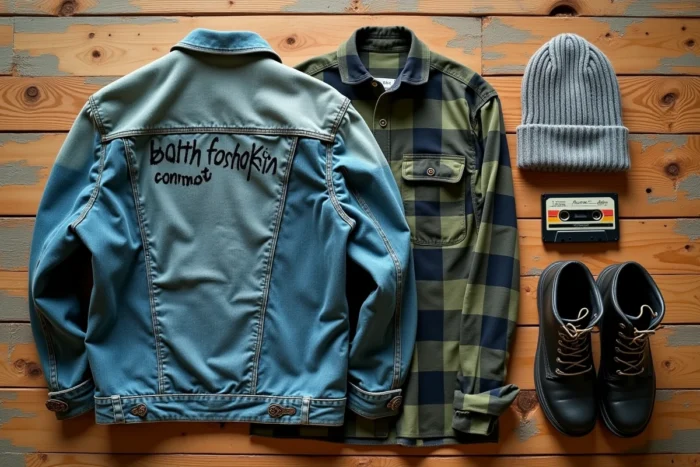
A clothing style born in a local scene does not conquer the world on its own. The spread of the grunge look beyond Seattle was propelled by very concrete channels.
MTV played a central role. Nirvana’s music videos, played on repeat, showed Cobain in his everyday clothes. Each airtime functioned as an involuntary fashion show. Fashion magazines and music press then relayed these images, turning them into style references.
The most significant shift occurred when ready-to-wear brands began offering “clean” versions of the grunge look. New flannel shirts, pre-torn jeans, special edition Converse. The style of the streets and thrift stores became a shopping mall product, accessible to any teenager.
This trajectory, from local to global via mass media and retail, explains why the grunge look did not remain a regional curiosity. It became the uniform of an entire generation, well beyond just alternative rock fans.
An legacy that transcends seasonal trends
Most fashion trends of the 90s have disappeared or only return in nostalgic cycles. Grunge, however, left a structural imprint. Contemporary men’s fashion still bears the trace of what Cobain popularized: layering, deliberately loose clothing, sneakers worn as everyday shoes, and the valorization of vintage and second-hand.
Brands like Gucci have incorporated grunge elements into their recent collections, proving that the phenomenon goes beyond mere nostalgia. Grunge normalized the idea that style can emerge from a rejection of fashion, and this idea continues to influence clothing creation more than three decades after the release of Nevermind.