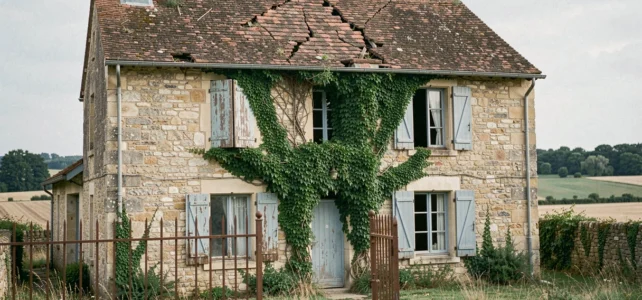
The classic thirty-year period without claims or property tax payment to qualify a property without an owner has long hindered free acquisition projects. In 2026, this lock will loosen in certain areas, but “free” remains a misleading term that conceals heavy commitments and often higher restoration costs than the market value of the acquired property.
Reduced period to ten years for ownerless properties: what the revitalization of city centers changes
The procedure for ownerless property is based on Article L. 1123-1 of the General Code of Public Property. It assumes that no owner has come forward and that no property tax has been paid during the required period. In 2026, several legal analyses confirm that this period can be reduced to ten years as part of territorial revitalization operations or large urban planning projects.
We observe that this reduction accelerates the transition of vacant properties to municipal heritage, but it does not guarantee a free transfer to individuals. The municipality recovers ownership and then decides whether to allocate, sell, or transfer it for a symbolic euro according to its own selection criteria. Competition between projects mechanically intensifies, as more properties become eligible in the targeted areas.
In practical terms, a potential buyer must first check if the municipality has initiated a revitalization operation (ORT, for example) covering the area of the targeted property. Without this framework, the thirty-year period still applies. You can follow real estate news on EuropImmo to identify municipalities activating these measures.
Law of April 7, 2026 on vacant inheritances: an underestimated lever for real estate acquisition
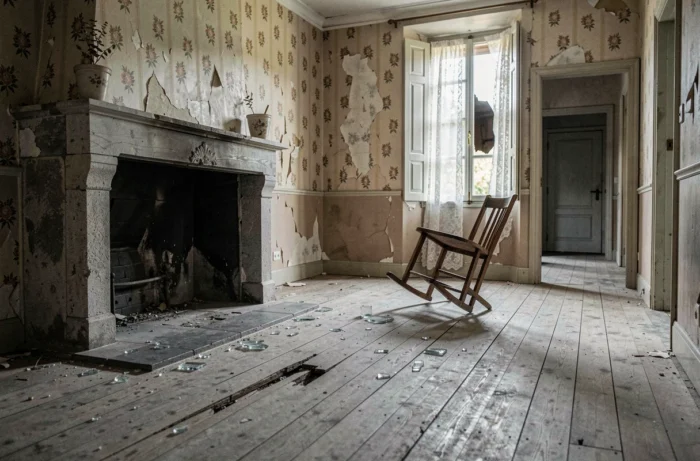
The law of April 7, 2026 modifies the regime of blocked inheritances by allowing the curator to sell real estate to settle liabilities without adhering to a rigid ordering between categories of properties. This reform has a direct effect on the stock of abandoned houses: properties that remained frozen for years in vacant inheritances can now be brought to market more quickly.
For a buyer, this means that the Domain service (State Real Estate Directorate) will have a more regular flow of properties from vacant inheritances. These sales are not free, but transfer prices often remain very low when the building requires heavy work and is located in a low-demand area.
However, the distinction between vacant inheritance and ownerless property remains a technical point not to be confused. In a vacant inheritance, a deceased owner is identified, but their heirs have renounced or are untraceable. The curator manages the liquidation. In the case of ownerless property, no owner is known. The acquisition methods, timelines, and contacts differ entirely.
Renovation budget for an abandoned house: the true cost behind the free offer
A transfer for a symbolic euro or a very low acquisition price through the Domain only represents the visible part of the operation. The renovation budget often far exceeds the final market value of the property, especially for rural houses abandoned for several decades.
Key items to estimate before any commitment:
- Major works and structure: roof repair, treatment of frameworks, consolidation of load-bearing walls. On an old, unmaintained building, these items alone can absorb the majority of the total budget.
- Energy compliance: insulation, replacement of joinery, installation of a compliant heating system. The obligations of the energy performance diagnosis weigh on the future valuation of the property.
- Mandatory diagnostics and notary fees: even on a free transfer, transfer duties, diagnostics (asbestos, lead, termites depending on the area), and notary fees represent several thousand euros.
- Connections to networks: water, electricity, sanitation. An abandoned house in a rural area may no longer be connected, leading to significant viability costs.
We recommend having a structural assessment done before any signing, including before a commitment to a municipality for a symbolic transfer. The work clauses imposed by municipalities (completion deadlines, obligation of primary residence for five to ten years) make the project irreversible once agreed upon.
Municipal transfer for a symbolic euro: actual conditions and selection criteria in 2026
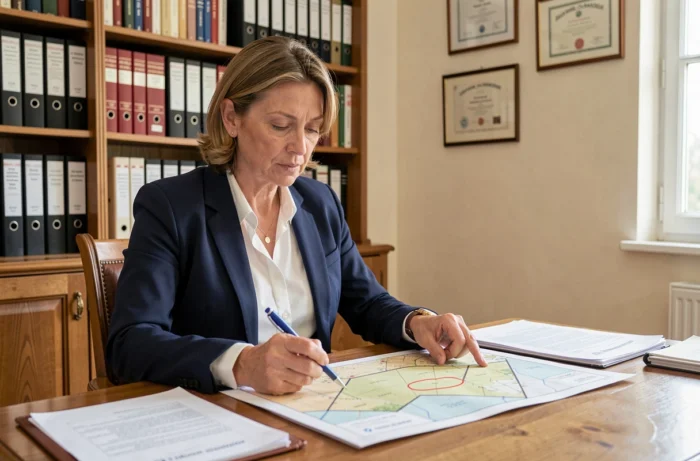
Programs like “houses for one euro” exist in several rural municipalities facing demographic decline. The principle is simple in appearance: the community transfers a property for a symbolic price in exchange for a commitment to renovation and residency.
In practice, municipalities select applications based on the robustness of the renovation project and the financial capacity of the candidate to carry out the work within the allotted time. An application without a detailed financing plan or quotes from local craftsmen has little chance of success.
Common counter-commitments include:
- Obligation of primary residence for a fixed duration (often five to ten years), with a resolutory clause in case of non-compliance.
- Deadline for completing the work (generally two to three years), monitored by the municipality.
- Prohibition of resale during the commitment period, or reimbursement of the difference between the symbolic price and the actual value.
The Villages of the Future program, sustained in 2026, supports certain municipalities in these revitalization efforts. The engineering provided facilitates the preparation of applications on the community side but does not change the obligations on the buyer’s side.
Cadastral verification and search for the owner
Before any steps, consulting the cadastral records at the town hall or on the cadastre.gouv.fr portal allows for identifying the parcel and its status. The land publicity service provides the identity of the registered owner and the history of transfers. If the owner is unknown or deceased without known heirs, the town hall can initiate the procedure for a finding of manifest abandonment, a prerequisite for possible appropriation by the municipality.
These verifications are mandatory. Occupying a property without a title exposes one to prosecution for trespassing, even if the building appears abandoned for years. The acquisitive prescription (usucapion) requires continuous, peaceful, and public possession for thirty years, a timeframe that makes this route unrealistic for a project in 2026.
Obtaining an abandoned house for free remains legally possible, but the term “free” only applies to the acquisition price. The overall cost of the operation, including renovation, notary fees, and commitment constraints, makes it a full-fledged heritage project that requires the same rigor as a conventional purchase.