90° alcohol refers to food-grade ethanol whose high concentration prevents any microbial proliferation in the jar. Used to preserve whole or chopped fruits, it creates an environment where the microorganisms responsible for spoilage cannot develop or produce toxins. This technique does not rely on heat, but on the drastic reduction of water activity in contact with the fruit.
Water Activity and Strong Alcohol: Why Fruits Do Not Spoil
The principle of alcohol preservation is based on a precise mechanism. When a fruit is immersed in alcohol with a minimum of 40° alcohol content, the free water available for bacteria decreases significantly. At 90°, this free water becomes too low for Clostridium botulinum spores to produce their toxin.
Recent guidelines for botulism prevention in home canning confirm this approach. Fruits and sweet or alcoholic preparations do not require pressure sterilization if the acidity or alcohol content is sufficient. The risk of botulism is concentrated on poorly treated canned vegetables, meats, and low-acid preparations.
In practice, 90° alcohol for fruits acts as a self-sufficient preservative. Knowing where to buy 90° alcohol for fruits at Leclerc remains a common question, as this product is not available in all aisles and its regulations vary by store.
This property places fruits in alcohol among the low-risk home preservation methods, alongside jams and pickles. Health authorities also encourage individuals to favor these techniques over canning low-acid vegetables at room temperature.
Choosing Fruits and Preparation Before Jarring
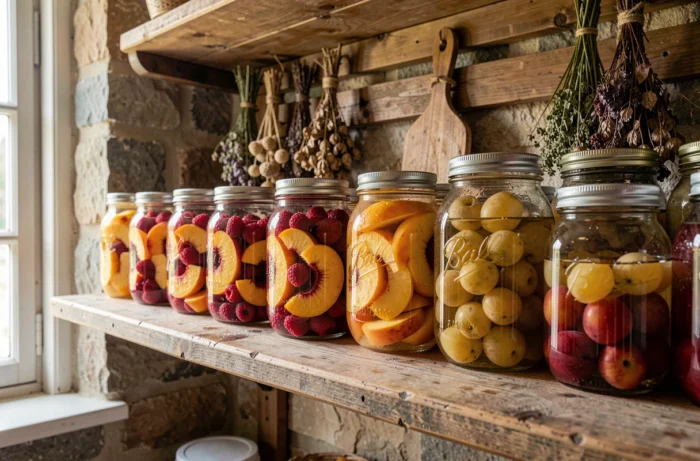
Not all fruits react the same way when in contact with concentrated alcohol. Firm-fleshed fruits (cherries, mirabelles, plums, pears) maintain their texture for several months. Very soft fruits (raspberries, overripe strawberries) disintegrate quickly and release too much juice, diluting the alcohol in the jar.
Criteria for Selecting Fruits
- The fruit should be just ripe, neither too green nor overly mature. An overripe fruit contains more water and lowers the alcohol content in the jar.
- Damaged, stained, or bruised parts must be removed before any contact with alcohol. A defect on the skin can introduce molds that alter the taste.
- Washing should be done with clear water, followed by thorough drying. Any residual water on the fruits dilutes the alcohol concentration at the time of filling.
- Some fruits (cherries, plums) benefit from being pricked with a needle so that the alcohol penetrates the flesh evenly and the flavors develop.
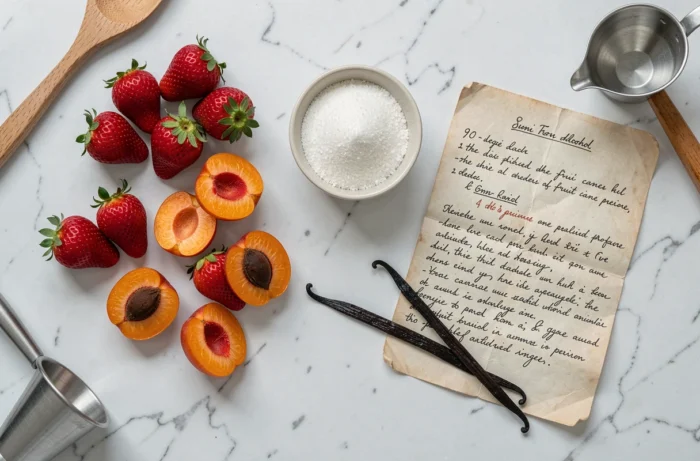
The sugar added to the jar plays a dual role. It softens the alcohol through osmosis and further reduces water activity. The amount depends on the natural acidity of the fruit: a naturally sweet fruit like the mirabelle requires less sugar than a quetsche.
Filling the Jar and Alcohol-Fruit Ratio
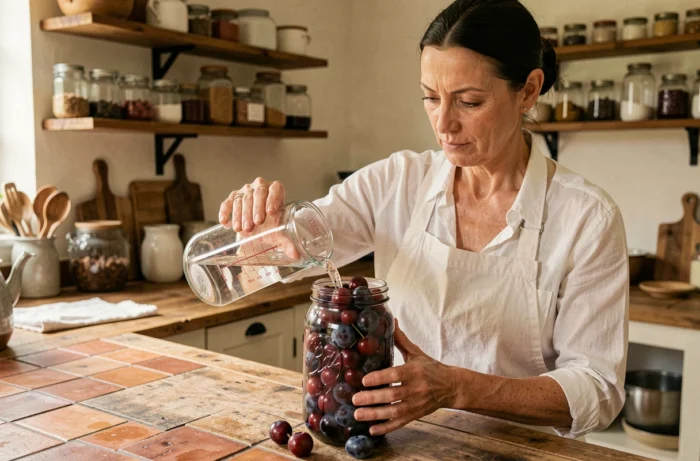
Filling is the moment when most mistakes occur. A jar that is too full of fruit and not enough alcohol creates air pockets and poorly covered areas. The fruit must be completely submerged, without exception.
Proportions and Filling Technique
The practical rule is to fill the jar two-thirds with fruit, then pour the 90° alcohol until it generously covers the top. The sugar (powdered or previously dissolved in syrup) is distributed among the layers of fruit as the jar is filled.
The lid must seal tightly. Classic rubber-seal jars are suitable, provided the seal is new and the surfaces show no chipping. After sealing, turning the jar upside down for a few seconds allows for checking for leaks.
A often overlooked point: fruits rise in the first few days. Turning the jar once a week for the first two to three weeks redistributes the alcohol and sugar evenly. This simple action improves the final quality of the flavors and prevents a layer of crystallized sugar at the bottom.
Storage and Duration of Maceration of Fruits in Alcohol
Maceration takes time. A minimum of two months is necessary for the exchanges between the fruit, sugar, and alcohol to reach a flavor balance. Alcohol-soaked cherries, for example, develop their full aroma after three to four months.
Storage should be done away from light and in a cool place. Light degrades the pigments of the fruits and can alter the taste. A cellar, pantry, or cupboard away from any heat source is ideal.
Signs of Successful Preservation
- The liquid remains clear or takes on the color of the fruit without becoming cloudy. Persistent cloudiness may indicate unwanted fermentation due to excessive dilution of the alcohol.
- The fruits retain a recognizable shape and do not turn to mush.
- Upon opening, the smell is clear, fruity, and alcoholic, without any sour or vinegar notes.
The shelf life exceeds one year if the alcohol content in the jar remains sufficient. Some preparations (whole fruits in lightly diluted alcohol) can last several years without significant loss of quality. The taste continues to evolve slowly, with the flavors of the fruit and alcohol blending over time.
An opened jar should be resealed quickly and consumed within the following weeks, as the gradual evaporation of alcohol reduces its preserving capacity. Using smaller bottles to divide a large preparation limits this issue.
Preserving fruits in 90° alcohol remains one of the most reliable techniques for homemade preserves, provided that complete immersion, the alcohol-fruit ratio, and proper storage are respected. The jar does the rest.